What to verify before calling a locksmith for a home lockout
Gathering the right details before you dial
A lockout at home is rarely convenient. You may be standing in the hallway without your keys, or you might have locked yourself out while taking out the trash. In that moment, the natural instinct is to grab your phone and call the first locksmith number you find. But a short pause to gather a few pieces of information can make the whole process smoother and faster. Having the right details ready helps the locksmith arrive prepared, and it also protects you from potential confusion or delays.
This article walks through the key information you should have on hand when you call for home lockout assistance. Each point serves a practical purpose, whether it is verifying your identity, describing your lock type, or clarifying access rules. When you provide clear answers, the locksmith can bring the correct tools and complete the job efficiently.
Your location and the exact entry point
The first thing any locksmith needs is your address. But a street number alone may not be enough. If you live in an apartment complex, a row of townhouses, or a multi-unit building, specify the building number, floor, and unit. Describe which door you are locked out of: the front door, a side door, a back door, or a garage entry. A clear description prevents the locksmith from circling the block or knocking on the wrong door.
If the property has a gate code, a buzzer system, or a security intercom, provide those details too. The locksmith may need to enter through a secured entrance before reaching your door. Knowing this in advance saves time and prevents a second call for access instructions.
Proof that you belong there
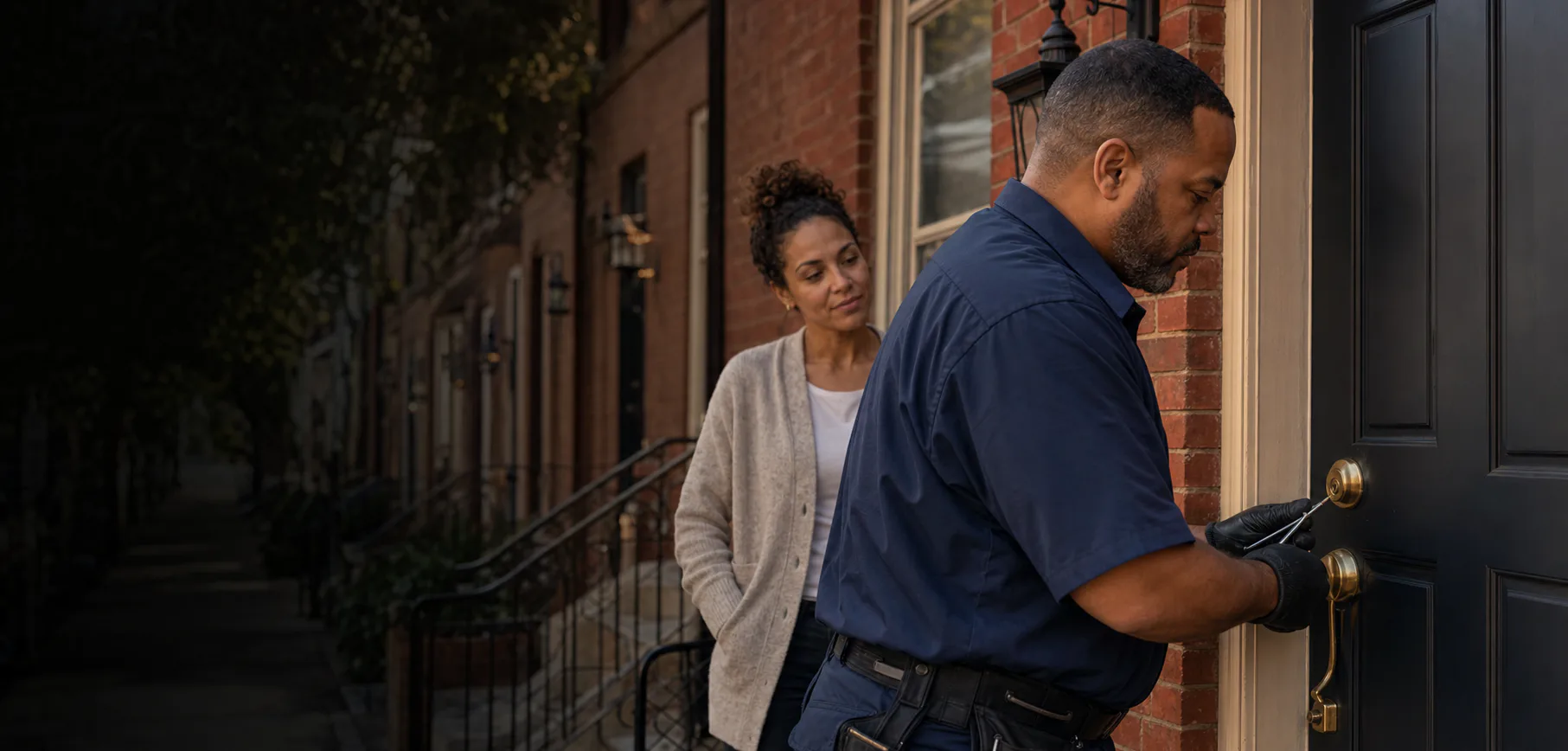
A reputable locksmith will ask for verification that you are the resident or an authorized occupant of the property. This is a standard security measure, not a sign of distrust. Without it, anyone could claim a lockout and gain entry to a home that is not theirs. Prepare to show photo identification, such as a driver's license or passport, that matches the address on file. If your ID does not list that address, bring a utility bill, lease agreement, or bank statement that does. Proof of residence can be a digital copy on your phone, but a physical document is often easier to present through a window or door crack.
For rental properties, the locksmith may also request a note from the property manager or a lease document that confirms your tenancy. This step is especially important if you are a recent tenant and your name is not yet on any utility bills. Having this documentation ready before the locksmith arrives can avoid awkward delays at the door.
The type of lock and door hardware
Not all locks are the same. A deadbolt, a keypad lock, a mortise lock, and a simple door latch each require a different approach and sometimes different tools. If you can, describe the lock you are dealing with. Look at the door from the outside, if you have a clear view through a window or a side light. Note whether it has a single cylinder deadbolt (key on the outside, thumb turn on the inside), a double cylinder deadbolt (key on both sides), or a lever handle with a built-in lock. Mention if the lock is part of a smart lock system or if it has an electronic keypad.
If you cannot see the lock, describe the door. Is it a standard wooden door, a metal security door, or a sliding glass door? Each type has its own vulnerabilities and best opening methods. The more the locksmith knows, the more likely they are to bring the right tools and complete the job without causing damage.
Whether the key is inside, broken, or missing
The circumstances of the lockout matter. Did you leave your keys on the kitchen counter? Did the key snap off in the lock? Or did you simply walk out and realize the door clicked shut behind you? Each scenario changes the approach. A broken key stuck in the lock may require extraction before the lock can be manipulated. A lost key means the locksmith may need to pick the lock or create a new key from the lock code.
If the key is broken, describe the condition of the break. A clean break near the head of the key is different from a jagged break deep inside the lock. In many cases, a locksmith can remove the broken piece without damaging the lock mechanism, but they need to know what they are up against. This is one of the situations where professional assistance after a broken key becomes essential, because a DIY extraction with pliers or tweezers can push the fragment deeper or damage the pins.
Who else has access or authority
If you share the home with roommates, family members, or tenants, the locksmith needs to know who has authorized the entry. In many jurisdictions, a locksmith cannot open a residential door without the consent of the property owner or a named occupant. If the leaseholder is away, you may need to provide their written permission or a contact number so the locksmith can verify. The same applies if a property manager or landlord is the one calling on behalf of a tenant. Access verification is a legal safeguard that protects both the locksmith and the occupant.
If you are locked out of a rented apartment and the property manager has a spare key, it is often faster to call them first. But if they are unreachable, a locksmith can still help once you provide proof of your tenancy. Being upfront about the ownership and occupancy situation avoids misunderstandings later.
Your availability and any time constraints
Locksmiths often operate on a mobile service model, meaning they travel from job to job. If you have a narrow window of time before you need to leave for work, pick up children from school, or meet a deadline, mention it when you call. The locksmith can prioritize your request or give you a realistic estimate of when they will arrive. Knowing this also helps you decide whether to wait at the door or find a neighbor's place to sit while you wait.
If you are locked out late at night or early in the morning, confirm that the locksmith offers 24/7 service. Most emergency locksmiths do, but it is worth asking. A clear timeline on both sides reduces stress and helps the locksmith plan their route.
Whether the lock is a high-security or restricted type
Some locks are designed to be difficult to pick or bypass. High-security deadbolts, electronic locks with anti-tamper features, or locks with a restricted keyway may require specialized tools or a longer time to open. If you know your lock brand or model (Medeco, Mul-T-Lock, Schlage Primus, or similar), mention it. The locksmith can then decide if they need to bring additional equipment or if a standard picking method will work.
For electronic or smart locks, the locksmith may need to know whether the system is battery-powered or hardwired, and whether the lock has a mechanical override. A dead battery in a keypad lock can sometimes be solved with a 9-volt battery jump, but that depends on the model. Providing the make and model number speeds up the troubleshooting process.
Any previous lock repairs or modifications
If the lock has been repaired, rekeyed, or replaced recently, mention it. A lock that has been worked on may have loose screws, misaligned components, or non-standard parts that affect how it behaves. Similarly, if the door itself has shifted, warped, or been painted over, the latch may not align properly. A locksmith who knows the history of the hardware can anticipate problems and bring the right shims or replacement parts.
This is also the moment to mention if you have tried to open the door yourself with a credit card, a screwdriver, or another tool. Sometimes these attempts leave scratches or bend the latch. Being honest about what you have done helps the locksmith assess the situation accurately and avoid further damage.
Insurance or roadside assistance details
If you have home insurance or a roadside assistance plan that covers lockouts, have your policy number and contact information ready. Some plans reimburse the cost of a locksmith or have a preferred provider network. While the locksmith will not bill your insurance directly in most cases, having the details means you can file a claim later. This is especially useful if the lockout was caused by a broken key or a malfunctioning lock, as the repair or replacement may be covered.
Even without insurance, knowing your budget or any spending limits helps you set expectations. A locksmith can often give a rough quote over the phone based on the information you provide. Being upfront about the lock type and the complexity of the job prevents surprises when the invoice arrives.
In the end, a home lockout is a temporary inconvenience. With a few minutes of preparation and the right information, you can turn a stressful situation into a straightforward service call. The key is to stay calm, gather your documents, describe the lock and the door accurately, and confirm authorization. When you call, the locksmith will appreciate the clear details, and you will get back inside sooner. Remember that professional assistance after a broken key is a common request, and a good locksmith has handled it many times. Trust their expertise and let them do the work.